










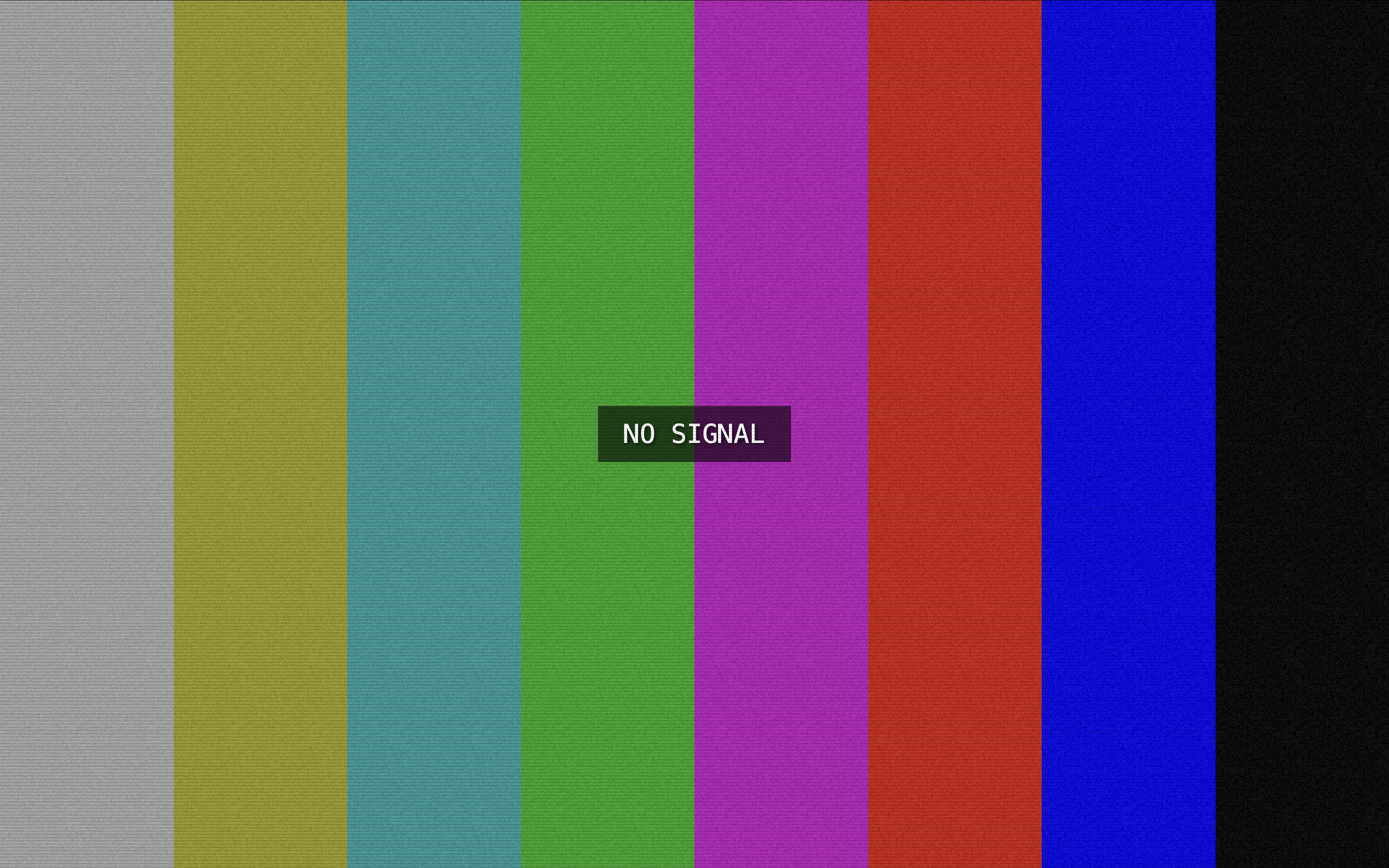
NO SIGNAL
No Signal TV Screen

Ekrany Żartów


Ekrany Fałszywych Aktualizacji
.webp "Fałszywa aktualizacja macOS")

Ekrany Kolorów
Ekrany Tapet



Ekrany Wideo


This is a free no signal TV screen: the classic broadcast color bars, the vertical stripes of color a television showed when there was nothing to display, paired with the familiar No Signal message. Press F11 for fullscreen and your screen becomes a dead channel from the broadcast era. Press Esc to bring it back. Nothing installs, and it runs in any browser on any device.
How to Use the No Signal Screen
- Open this page on a monitor, laptop or TV browser.
- Press F11 for fullscreen so the color bars fill the display with no browser edges.
- Leave it running as a prop, a prank or retro decor. Press Esc to exit.
What the Color Bars Actually Are
Those stripes are not random. They are a real broadcast test pattern, most famously the SMPTE color bars, a standard engineers used to check that a television or broadcast signal was showing color correctly. Each bar is a precise reference color, white, yellow, cyan, green, magenta, red and blue, arranged so a technician could spot at a glance if the hue, brightness or contrast had drifted.
Stations showed these bars when they were off air or setting up, which is how the pattern became tied in everyone's memory to "nothing is on right now." So this screen is doing double duty: it is the universal symbol of a dead signal, and it is a genuine color reference pattern that engineers actually trusted.
Why the No Signal Screen Is Pure Nostalgia
For anyone who grew up before streaming, this image carries weight. It meant the channel had gone off air for the night, the VCR had stopped, or the cable had come loose. Late night television used to end, and the color bars (often with a steady tone) were what you found if you stayed up too late. Lose a signal on a modern smart TV today and you get a tidy "No Signal" or "Check your connection" card instead, clean and forgettable, which is exactly why the old color bars now feel so charged with retro feeling.
It pairs naturally with the white noise screen, the snowy static that was the other thing a lost signal gave you. Bars meant a station was there but not broadcasting; static meant no station at all. Between the two, you have the full dead TV experience of the analog age.
What People Use the No Signal Screen For
- Retro and aesthetic decor. A TV showing color bars instantly sets an 80s or 90s mood for parties, lounges, vaporwave and retro themed setups. It is one of the most recognizable retro visuals there is.
- Film, video and streaming props. Creators use the no signal screen as a transition, a glitch effect, an intro or an away screen. It reads instantly as broadcast and breakdown, no explanation needed.
- The dead TV prank. Fullscreen color bars on the living room TV, and the channel hunt begins. The fact that modern TVs do not actually show this pattern makes the confusion better.
- Music and stage visuals. The bars are a staple of music videos, album art and live visuals for that analog, broadcast aesthetic.
- Photography backdrops. A screen of color bars behind a subject gives a striking retro tech look in photos.
A Quick Note for Video Creators
If you came here for a genuine reference rather than the look, a small honest caveat. A web page showing color bars is perfect for the retro aesthetic and for props, but it is not a calibrated signal. Real color calibration uses bars generated by trusted test equipment at known signal levels, not a browser on a screen whose own settings you may have changed. Enjoy this as the authentic broadcast look and a fun prop; reach for proper test gear when you actually need to calibrate a display or a camera.
Frequently Asked Questions
What are the color bars on a no signal screen?
They are a broadcast test pattern, most famously the SMPTE color bars, made of precise reference colors, white, yellow, cyan, green, magenta, red and blue. Engineers used them to check that a TV or signal was reproducing color correctly, and stations showed them when off air.
Why did old TVs show color bars or static when there was no signal?
Color bars appeared when a station was present but not broadcasting a program, for example off air or during setup. Snowy static appeared when there was no station signal at all, just random noise picked up by the antenna. Modern TVs replaced both with a simple No Signal message.
Can I use this to calibrate my TV?
For the look and for props, yes, but it is not a calibrated reference. Real calibration uses bars from trusted test equipment at known signal levels, not a web page on a screen with its own settings. Use this for the aesthetic, not for precise calibration.
How do I make it fullscreen?
Press F11 in your browser, or use the browser's fullscreen option, so the color bars fill the screen. Press Esc to exit.
Will it work on a phone, tablet and smart TV?
Yes. It is a web page, so it runs in any modern browser on phones, tablets, computers and smart TVs.
Is this no signal screen free?
Completely free. No account, no download and no watermark.
Related screens: The snowy static version is the white noise screen · Retro bouncing motion is the DVD logo screensaver · A retro clock is the flip clock screensaver